Monday, July 6, 2015

The Map Problem:

In my previous article I mentioned regarding a dearth of writing from certain perspectives. If someone asked me what my perspective was, I would be tempted to reply "Hindu Civilizational Perspective", and yet it remains fuzzy. What is HCP? Is there one and unique HCP? Such issues prop up. It is also true that it is arduous to define HCP.

Recently I came across a quote, attributed to one Chief Justice P. B. Gajendragadkar. Please read the quote before proceeding. I twitted:

The Judge erred in the final sentence. It should be: "It is a way of life, and Much More." : Dakshinamurthy.


I wonder why such  errors happen, that is, why do Hindu intellectuals traverse a valuable path and then suddenly falter or dither. I want to share my current understanding of the situation.

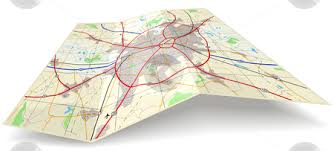
Here I place before you two pictures, each purporting to be a map. For convenience you can assume one to be map-A and the other to be map-B. Now, notice that there are various roads shown in both maps.

map-A

map-B


Now I ask you a simple question, which road will take you to your destination? Can you answer it? Don't jump to a conclusion, please think slowly, carefully, and coolly. Further, if I told you that you need to take some particular road (say, some specified route), will you accept my answer? Again, please don't jump to a conclusion. Please read the preceding paragraph, and this paragraph, and think a while. These are not difficult questions, but take some time to think.

I am assuming you have indeed taken some time.

Now, as one tries to answer the said questions, one realizes that one needs additional information. For example:
1. Where am I? Where will my location (call it point S) appear on map-A and/or map-B?

2. Where do I want to go? Where will my destination (call it point D) appear on map-A and/or map-B?

If it turns out that both my starting point and my destination point are on the same map (whether A or B), the task becomes much easier. However, the moment it turns out that my starting point and my destination points are on different maps (one on map-A, and the other on map-B), we run into further complexities.
Further assume that neither map, shows its scale or its compass. The language and naming is disparate too. So what do we do? How do we go about finding an answer for ourselves?

We at once realize that we need a larger map which can place both the maps into one with appropriate scaling and directions. Then, and only then, can we hope to answer for ourselves. Now imagine what happens when we want to depict our geographical-social-political-cultural-civilizational condition/situation rather than mere geographical location. Doesn't the problem get much more complex?

Now I present to you my bigger hypothesis. I believe that we suffer from an even more complicated problem. In our present case, we in fact have three maps. Say, map-A, map-B, and map-C. Let us assume that they correspond to our historical situation (pre-Buddhism/Jainism etc.), present situation (Secularism, Democracy, etc.), and our desired situation in the future, that is our destination.

I also say that most of the terminology in present use is somewhat accurate to describe only a part of the picture of our present situation, that is map-B (not even where we ARE on map-B). About maps A and C, we have much less accurate depictions, and even these are often clouded by either fancy or prejudices. The difficulty is compounded by the limitations and constraints of the usage of the present day terms.

While the situation is so complex, our leaders (thought-leaders, political-leaders, etc.) are self-assuredly telling us that they have unambiguous and guaranteed-to-work solution to our problem. [Recall that the problem is: Where are we, and where do we want to go?] Why are the leaders promoting dubious solutions with great confidence? Doesn't that baffle you? It does me! And yet, we must not be averse to supposing simple and straight explanations, viz., they, many if not all, could be so selfish and short-sighted that they just don't care.

In my opinion, unless we address this map problem sufficiently, we will remain confused.

Wednesday, July 1, 2015

A Problem; And a Proposal.

I have been reading on the web for quite some time. In Indian circumstances one is handicapped in a peculiar way. While there are numerous writers of various hues and cries who author from certain perspectives belonging to one type; there are few who do likewise from perspectives belonging to the otherwise type. Sometimes I wonder whether there are any who belong to the real otherwise type. That is, I notice that there are none who write from a perspective of the real otherwise type. And this gives a sinking feeling that most of them are writing the same thing. It would have been a very happy happenstance if the said 'same thing' was as per my preference. Unfortunately, it is not. Unfortunately I strongly dislike it, even if do not despise it. Recently I have been interacting with some friends with whom I shared this plight of mine, and surprisingly I found quite a few sympathizers. Rather, it turned out that many were co-sufferers if you get what I mean.

Earlier when I was contemplating on the problem shared above, I used to think that there were no such writers because there are not significant number of people who share a perspective similar to mine. The exchanges with friends, however, changed my thoughts. It looked as if there are quite a few who shared my predicament. Thus, I started to wonder why none was writing any other way. I asked my friends, with whom I shared my thoughts, too. But none of them, while offering various causes as factors, did really put his hand on the nub of the issue. Also, while almost all were willing to gossip about it for long hours, few, if not none, showed any interest in discussing the issues slightly more seriously, or do the writing stuff. After all, I too find talking and gossiping much easier than writing. The pleasant surprise is that modern technology helps us circumvent many of such problems. I have always wondered why audio-blogs have not become ubiquitous, especially that mobile phones have become so common. There is no gainsaying, however, that any fairly serious exchange requires preparation, patience, and often perseverance. In simpler terms, one needs to do it a few times to gain reasonable clarity, as back-and-forth exchanges would happen. I do feel, however, that it needs to be done. I do not know whether there are many like me who have experienced similarly. I hope there are. With such hope, I am beginning this endeavor. This is as much a sharing as it is an invitation for sharing.

I am sure you would be wondering how I could ask you to share your views and perspectives without delineating mine so you could compare and decide. If you have read a few posts from this blog, you would know the general drift, notwithstanding the inability to pinpoint the focus exactly. After all, only the writer has changed, I will continue to this blog in the same tradition as I have inherited so to speak. When I asked him what his experience was, he told an interesting thing. He said: "There are silent appreciators, as well as, silent (outright) rejectors. So a meaningful exchanges are few and far between." I hope to facilitate breaking of such silences. Also, I am not omniscient, so it is possible that there are some who do write in ways that I am looking for. If you come across such, please do recommend.

Thank You.


Wednesday, June 24, 2015

Farewell

We have not been very regular for quite sometime. This is because we don't find the time and the energy to blog. We had been contemplating discontinuing it altogether. Someone who we know only on the cyber space suggested that it might be a good idea if someone else could continue the writing with a similar drift. Fortunately he could come up with a volunteer.

So, in some time, a new person will be writing this blog. Some elements of style might change, hopefully there will be a little more enthusiasm, if not regularity. The fundamental thrust will remain the same, or hopefully, get even better.

By July 1, 2015 the transition should be over.


Updated on: July 18, 2015 (Rath Yatra Day)

I am the new person, and I am maintaining both Twitter and Blog accounts.

Friday, June 19, 2015

Narendra Modi's Strategy

In our previous articles (see here, here, here and here) we wrote about our assessment of Modi's one year in office. We expressed our displeasure regarding many issues. In this article we want to present our view from the perspective that Modi does want to deliver on most fronts, but that he is timing it and strategizing it differently.

We present this in four segments. Models, Image, Time Line, and Strategy and Control. In models section, we describe our view of how various components of the picture. This will make us understand the behavior of the components. In image  section, we describe the kind of image that Modi needs to project (positive) and imager that Modi needs to guard against (negative) but which his detractors would like to push. In time-line section, we describe how deliverables must get delivered so that an advantageous situation exists for Modi in 2019. And finally, in the last section, we describe how, based on the models, the desired image and its time line, Modi can manueover the control variables for his goals.

This does not in the least mean that Modi wants to merely win elections in 2019. We believe him to be a well intentioned PM, and we believe that he wants to make a great change for the better in India. And for that he might need more than one term. However, what we mean is that Even if he is looking forward to merely win the 2019 elections, he could use the outline given in this article.

(A) Models:


1. Voter Model:

(i) Hindutva Middle Class voters are too demanding, and too easily irritable. They are the most difficult to get to vote too.

(ii) His Support Base (both potential and actual): Silent Hindutva poor, silent Hindutva middle class, (in potential) non-Hindu poor.

(iii) His opponents: Loud vocal secular (both Hindus and non-Hindus) Middle class, (in potential) non-Hindu poor, (now slowly increasing) Vocal Hindutva middle class.

2. Opponent Model:


(i) Congress and other opposition parties are not concerned about "Hindutva" voters of Modi. they know the flimsiness of the Hindutva-brigade (2004 etc.). Also they know that it is highly unlikely that Modi will do a Hajpeyi.

(ii) The main fear of the opposition parties is what the "middle and poor" class people perceive Modi as. We can notice that they are scurrying to alter Modi's image into a Corruption-accommodating and anti-poor leader. It is unlikely that they will succeed.

(iii) He has detractors within his own party, who might be waiting for Modi to fail/fall in some way, so that they can jump all over his corpse.

Possible Scenario Predictions:

(a) If he goes aggressive on Hindutva and economy goes in doldrums, people would say: why did he have to do it so badly. "Ghar mein khane ko nahin hai aur ladai pe nikal pade".

Remark: Modi would want to avoid this.
(b) If Economy takes off a little and then aggression happens as a result of cross-border provocation, he will have much better traction. (We have had a glimpse of this during this Myanmar incident).

Remark: Modi would want to have better than this.
(c) Before next LS election he would have achieved a healthy majority in Rajya Sabha, so he wants to aim at a strong (350+) majority in Lok Sabha in 2019.

Remark: Modi will have this as desirable.

3. Constraints Model (Simple Lessons for Modi from 2004 loss; a few possible causes that added up):


(i) Apologetic behavior regarding 2002, resulting in cringing-Hindutva image.

(ii) Despite decent infrastructure development and growth rate, the message could not be conveyed to people, Hindutva folks were completely sidelined, and India-Shining campaign was seen to be "arrogant".

4. Strong Points Model (Some innate strengths in favor of Modi):


(i) He will (most likely) remain personally clean and impeccable (unlike MMS).

(ii) If his party detractors, and opposition parties do not oppose him he will do much better. If they keep opposing him, he will gain sympathy (vo kaam karna chahata thaa par usako kaam nahin karne diye). This will help him to further strengthen his grip on BJP as well as candidate selection.

Remark: We don't view this as bad per se; for we can't disallow a PM, who we want to act as an efficient CEO, the freedom he seeks, and then blame him if he fails to deliver. He will have more to worry if he is given freedom, for then he will have to show success. He will be comfortable if he is denied freedom, for he can legitimately claim that he was not allowed to function freely. In our understanding, Modi will lay claim to the freedom he seeks and get it for himself, and he will also deliver what he has in mind. (Which may be different, in content and sequence, from what most critics or "intellectuals" expect)
(iii) He will not capitulate regarding 2002, anti-terrorism, etc. Even if he does not go the whole hog as per the "Hindutva" script.

(B) Image:


Modi would strive to project a comprehensive image in which:

(i) He remains clean, and impeccable.

(ii) He remains visible as someone who is working hard for noble goals.

Remark: The above two are easy, for Modi merely needs to be himself to be so. The only effort he needs to put in will be to counter the contra-campaign by his opponents (both within and without) to sully his image by reality-inverting propaganda. Modi should not take it lightly, but he need not boil his head over it. His actual personality, his ability to communicate, and most importantly, delivery of deliverables on the ground, will take care of this.
(iii) Development, infrastructure growth, Economic growth to be perceptibly better than 2004/2009.

(iv) Poor peoples' on ground experience and hope for the future to be significantly better than 2004/2009.

(C) Time Line:


Politics is as much about timing as it is about image. Even if it turns out that Vajpeyi was a stauncher Hindu than Chhatrapati Shivaji, it matters a little about the results of Election 2004 results.

Until now we believe that Modi will not have to be other than himself to project the right image. However, we do not rule out the possibility that someone could be compromised. For now, we can give him the benefit of the doubt.

(i) Poor peoples' on ground experience must change for the better, latest by third year middle, and keep steadily improving after that.

(ii) More aggressive economic reforms (free market for middle/upper class) can also begin then or even a bit later.

(iii). Fourth year, and later could see aggressive Hindutva or suggestive-Hindutva.

(D) Strategy and Control Variables:


To achieve the said image, at appropriate timing, given various models regarding the situation, a part of Modi's strategy could be (or possibly is):

(i) To provide "free market" to middle class. This will turn many "secular" into his voters even if it does not turn them into non-secular.

(ii) To provide "development" oriented welfare (not doles a la Congress, rather growth opportunities with charitable perspective) to poor. This will consolidate his Hindutva-poor base, and also significantly shift non-Hindu poor (Gujarat Experience?).
 

In view of the above he has (until now) managed the Control Variables appropriately, for example:

(i) Development focusing on for poor/lower-middle class. (This has begun)

(ii) Small scale industry oriented reform. (Has begun or might begin shortly)

(iii) Tax (Income Tax, etc.) reforms. (Can begin from third year too).

(iv) Hindutva agenda. (To be timed to peak at the right instance).

From the above, it is clear that Modi Government (even while doing much better than UPA yet being highly disappointing) is on a decent course.

Pit Falls:


What we have mentioned are average scenarios. We have ignored a few delicate but extremely important things.

(i) Modi himself is compromised:

The lure of becoming an international figure is often too strong even for the staunchest nationalists. While Modi is unlikely to be an easy or a cheap sell out like say Jawahar; the possibility that Modi has sold himself out, or has been bought out (A combination of threat and inducement) can not be ruled out with absolute certainty. While we are unhappy about Modi's volte face on FDI/GM-food/Aadhar etc., and we DO have our suspicions regarding certain employments under his govvernment for Economic posts, and while there are many who are "sure" that Modi is a zionist and all that; we still would like to give him a benefit of the doubt, at least for the time being.

However, you will notice that such a thing will not alter his winnability in 2019 (unless he stands exposed by then), if he does as what we mentioned in this article.


(ii) Subversion by the system itself:

Since we suspect that Indian system is heavily and highly infiltrated, timing and delivery can come unstitched if the system (both bureaucratic and judicial) subverts all the initiatives. Modi needs to take two steps. One, select key bureaucrats very very very carefully. Two, Change and Reboot the system itself. We skip this topic now, and will present our views on this in another article.

(iii) War:

International players can manipulate wars. Modi must ensure that either war does not happen, or if it happens India wins the war decisively. The how and why of this is beyond the scope of this article. However, as politicians, Modi and Shah might be intelligent enough to handle such a crisis should it arise.

Thursday, June 4, 2015

One Year of Modi Sarkar: Much Better Than UPA, But Heavily Disappointing. Part-4

Indian public was, has been, and is FED UP of politicians. Most politicians turn out Congress-style. Thus anyone who had a non-politician image did well in the recent past. Modi himself sold his image of a semi-non-politician who wanted to "change" the system, and wanted to "perform". In the following we present an assortment of what he spoke during his campaign. We are not providing exact quotes, we are mostly relying on our memory, and we request our readers to exercise their discretion.
  1. Real change choose me otherwise there are many others
  2.  I am Hindu Nationalist.
  3.  Unapologetic 2002, puppy remark.
  4.  Punish the corrupt
  5.  It is not government's business to do business.
  6.  Policy driven state

Then, when he was feeling somewhat more "confident", he started mixing it up with Twisters like:  "toilet over temple",  and "constitution holy book" (he continues to stick with it now). It was occasionally interspersed with foolishness like: "technology will solve corruption", "new cities beside optic fiber cables" and so on. By that time his 5F, 3T, and such Readers Digestian fluff had become quite popular (they continue to remain so).


However, we believe that people (especially Hindus) developed a love for Modi because he appeared to them a semi-non-politician who wanted to bring about real-change. The real change can not come without appreciating the following two things:
  1. There is a looming existential threat to Hindu Civilization. The threat is a continuation of what has been going on for about a millennium. And there is an urgent need to not only take cognizance of it, as well as "naming it".
  2.  This subversion happens in variegated forms, which are led by a subversion of language, law, and education.
  3.  In view of such existential threats, no amount of "development" is meaningful without urgently strengthening "civilizational security".

Now lets us mix it up a bit:

       4. It is important to bootstrap development in order to bootstrap security. Undeveloped societies do not remain secure for long. Thus development is critical too.

       5. However, it must be designed as "civilizational development". Mere development, or secular development is not just insufficient, it is positively dangerous.

Thus returning:

       6. We must recognize that true-secularism, and virat-hindutva too are insufficient, however much they may appear to be in the tight direction. And further, they are not merely insufficient, they are fraught with horrendous dangerous (especially in light of their vulnerability to deception).


In the face of all this, what did we observe? We, as Hindus get:
  • 1. Chastizing of pro-Hindu speech.
  • 2. A Sabka Saath Sabka Vikaas government being dedicated to poor, rather than being steadfastly anti-poverty.
  • 3. Civilizational wealth-redistribution rather than intra-civilizational charity.
  • 4. Often puerile ideas like "gharwapasi". gharwapasi is effective when those outside perceive how well their "in-house" friends are doing. Without taking care of those who remained in-house for a millenium despite horrible persecution, if we indulge in inviting "outsiders" for gharwapasi, we are NOT strengthening our civilization; we are incentivizing going out.
  • 5. When non-English educated hindu-civilizxationalists express opinions which name the threats, and caution our society, what is the result? They are being severely rebuked by those whose life is mired in Macaulayian indulgences.

Concluding Remarks:
Notice that whatever we have mentioned DO NOT take much time to make a Beginning. And yet, one year as passed, rather has been wasted and not even a whiff of a hint of movement has happened in the right direction. You find people "exposing" Islamic atrocities based on 9/11 (a mere decade and a half old incident, while Hindus suffered for a thousand years). You find people sloganeering "India with Israel" and "Hindus with jews" ( or likewise Indians with Palestinians etc) rather than the simple: Hindus for Hindu Civilization.

Also, extremely disturbing is the trend of obsession with "foreign things". Whether Indians educated abroad, or Indians with job-experience abroad. We are skipping FDI, GM crops, Aadhar for the moment. Each one of them is capable of dooming us. And yet, what does our PM say? He asks us to "trust" him. Well hindus trusted Mohandas, what did they get?

We will skip over good things like PM Jandhan Yojana, insurance, Mudra bank, etc. These might be good ideas but only fruits over a period time will tell. This also shows why we judge one year of Modi-Sarkar as much-better-than-UPA. However, on the most important fronts, it has been abysmal. It has done worse than mere failing, it has NOT Begun at all. And dear PM, that is why we are heavily disappointed.